

Comprehensive vision diagnostics
Request a consultationChanges in vision are not always noticeable right away: some eye conditions can develop without obvious complaints in their early stages. Comprehensive diagnostics helps assess visual acuity and the state of the main eye structures, and determine whether correction, treatment or further monitoring is needed. The examination suits a first visit to an ophthalmologist, a routine check, and an assessment of whether laser or surgical treatment is possible. Afterwards the doctor explains the results and suggests next steps based on the condition of your eyes and your daily needs.
When it's recommended
- Vision has become less sharp, and reading, screen work or seeing at a distance is harder.
- Eye fatigue, discomfort or trouble with your current glasses.
- Myopia, hyperopia or astigmatism, and you need to check that your correction is still right.
- A family history of glaucoma or other eye disease, or other conditions that can affect vision.
- Laser correction or eye surgery is planned.
- A routine checkup is due after a long break.
Treatment stages
Vision check
Visual acuity with correction fitting, and autorefractometry for objective refraction values.
Pressure and front of the eye
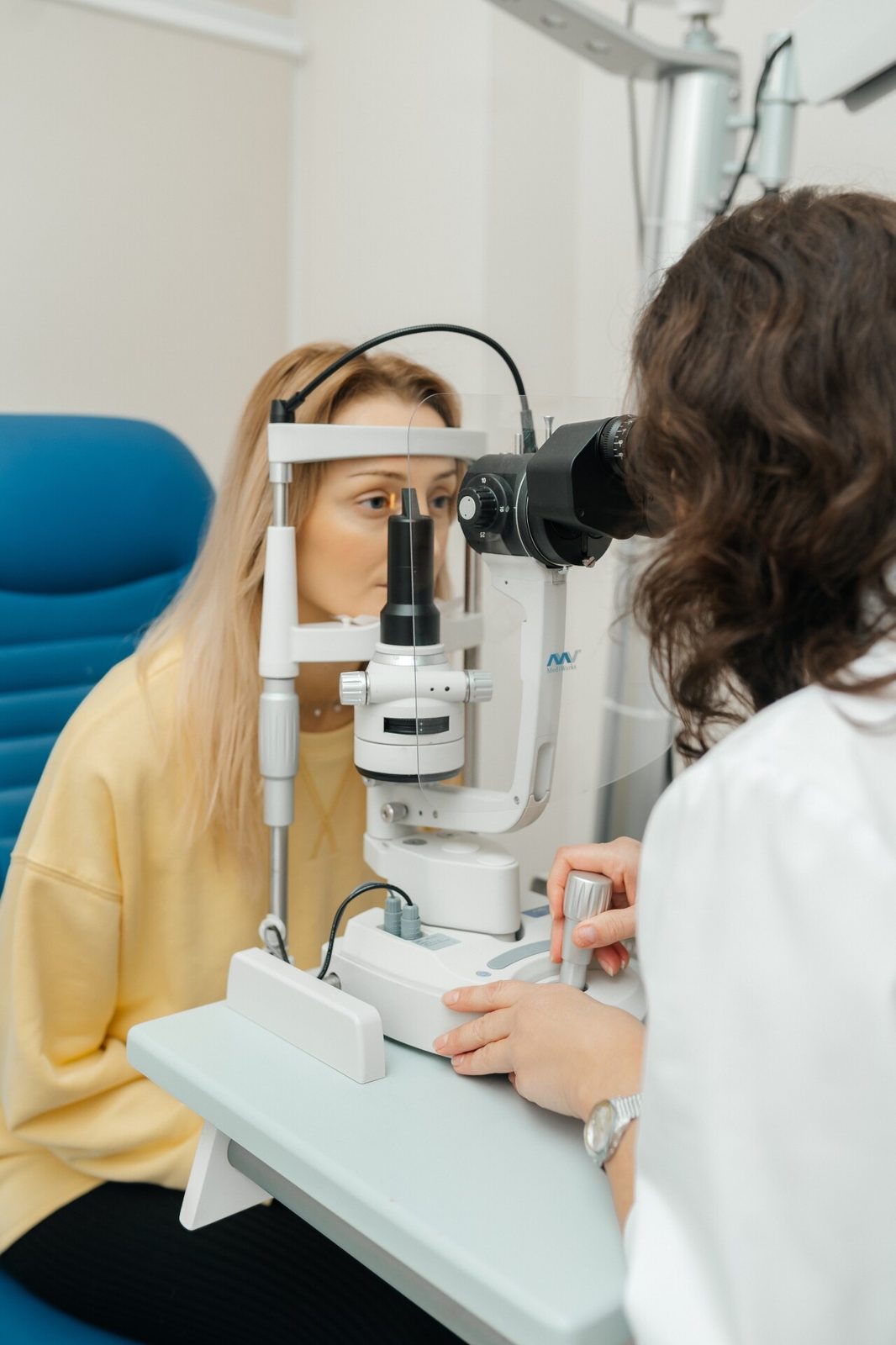
Intraocular pressure measurement and slit-lamp biomicroscopy of the cornea and lens.
Fundus
Examination of the retina and optic disc after pupil dilation, where there are no contraindications.
Final consultation
The doctor explains the results and whether further tests, correction or treatment are needed.
Benefits
A complete picture
The check covers not only visual acuity but also the front of the eye, the lens, the fundus and intraocular pressure.
A basis for choosing treatment
The results help the doctor decide whether optical correction is enough or further tests or treatment are needed.
Clear recommendations
The ophthalmologist explains what was found and recommends next steps and when to come back.
Timeline
Comprehensive diagnostics usually takes 1.5–2 hours, depending on the scope of the examination and how quickly the pupils dilate. Bring previous reports, your glasses and a list of medicines you use. If you wear contact lenses, ask about preparation rules in advance. After pupil dilation, vision may be temporarily blurred and light-sensitive, so plan to travel back without driving and bring sunglasses.
What's included in the price
The base examination covers visual acuity with correction fitting, autorefractometry, intraocular pressure, biomicroscopy and a fundus exam. The ophthalmologist assesses the results at the final consultation. Where indicated, the examination is supplemented with corneal topography, visual field testing, ultrasound, OCT and other methods, and their necessity and cost are agreed separately. OCT and other separately paid tests are not added to this price without agreement. Whether the special rate applies when booking through Dr. Concierge is confirmed at booking.
Dr. Concierge is not a medical facility, does not provide medical services and does not guarantee treatment outcomes. All medical decisions are made solely by the partner clinic.
Pricing
The patient chooses the treatment option based on budget and expected outcome. Every option's price includes the full protocol, from diagnostics to follow-up checkups.
Prices updated: 2026-10-05
Reference rate of the National Bank of Ukraine as of 06.10.2026. The final amount and settlement terms are confirmed in your request.
Initial comprehensive diagnostics, standard rate
1,500 UAH
Request a consultationInitial diagnostics for children under 18 and pensioners
1,300 UAH
Request a consultationInitial diagnostics under special booking terms via the clinic's site or direct messages
1,300 UAH
Request a consultationRepeat comprehensive diagnostics
1,300 UAH
Request a consultation
Additional services
What the main tests show
Visual acuity: each eye without correction and with fitted correction. Autorefractometry: objective refraction values. Tonometry: intraocular pressure, read together with the rest of the exam. Biomicroscopy: the front of the eye, including the cornea and lens. Fundus exam: the parts of the retina and optic disc that can be seen. A single measurement does not answer every question: if something looks suspicious, the doctor may recommend OCT, perimetry or further tests.
Common questions
- Is a chart check enough?
- A chart assesses visual acuity but does not replace examining the structures of the eye. Even with good acuity there can be changes that need a doctor's attention.
- Why are the pupils dilated?
- It allows a more detailed look at the fundus. After the drops, blurred near vision and light sensitivity can last several hours; recovery time is individual.
- Do I need to stop wearing contact lenses?
- Some measurements need a break from lenses. How long depends on the lens type and the purpose of the exam, so ask for the recommendation when you book.
Also see: Vision Passport: comprehensive Check-Up, Also see: Laser vision correction, Also see: Cataract microsurgery, Also see: Corneal cross-linking for keratoconus, Also see: Orthokeratology: Paragon / MoonLens, Also see: Laser coagulation and laser eye treatment
Request a consultation
Tell us what you're looking for and we'll get in touch with you.
You're inquiring about: Comprehensive vision diagnostics (Tarus Ophthalmology Center)
The clinic is responsible for providing medical services; Dr. Concierge is responsible for organizing the trip. Who is responsible for what